
Travertine & Natural Stone Sealing in Tampa Bay
Travertine sealing in Tampa Bay is its own craft, not the same job as concrete pavers. Travertine, marble, and other natural stone are softer, more porous, and sensitive to acids and salt, which is why stone decks and patios need a different product and a gentler hand. We seal travertine and natural stone the right way, with breathable penetrating sealers that protect the stone without trapping moisture or hazing it over.
Get Your Free Instant Quote →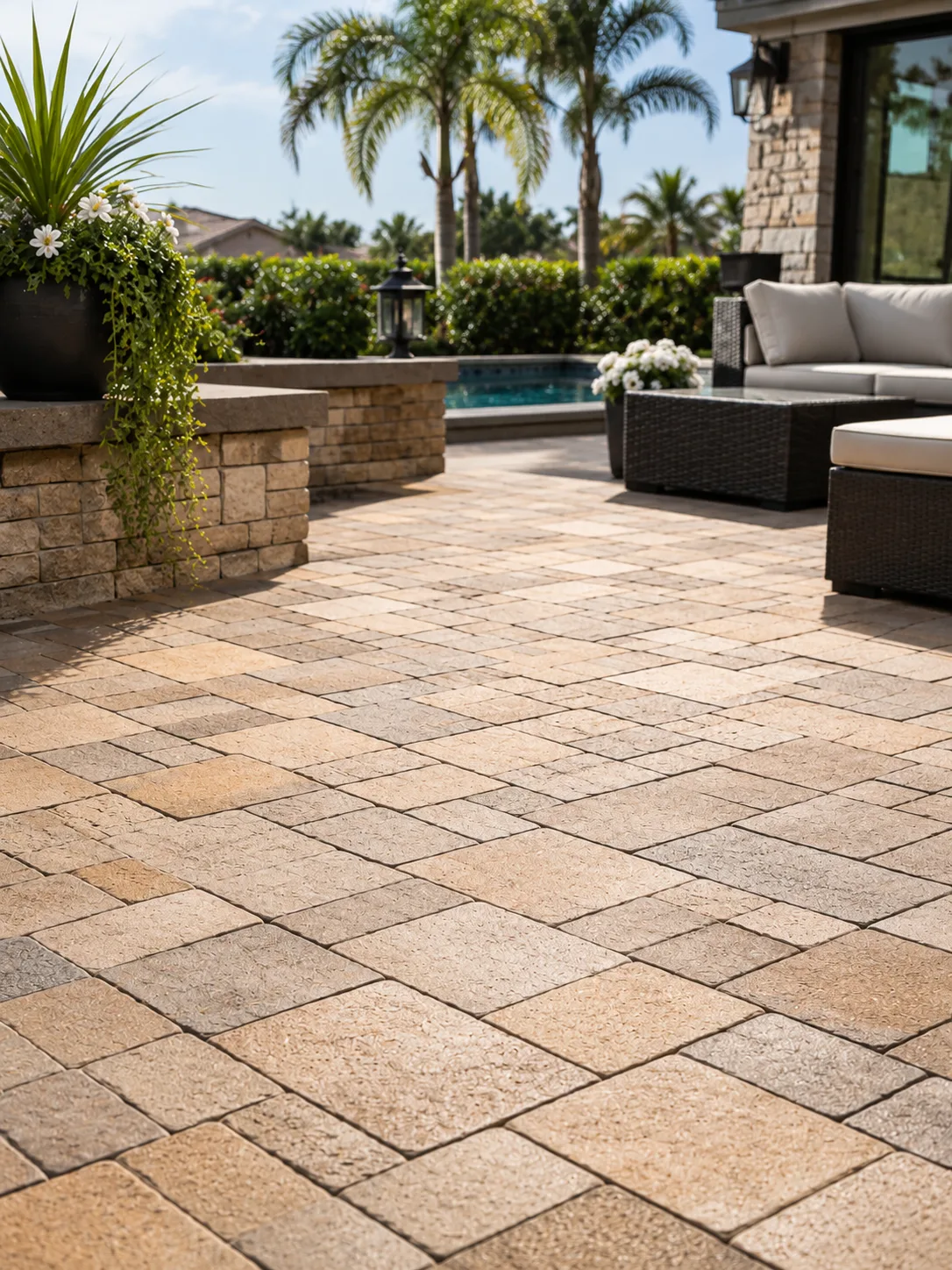
What happens without it.
Natural stone is calcium-rich and reacts badly to acids, and in a Florida pool environment it faces sun, chlorine or saltwater, and constant humidity. Saltwater, chlorine, harsh cleaners, and constant moisture can accelerate staining, residue, and surface wear on travertine if it is not cleaned and sealed correctly. Sealing puts a protective barrier in place so the stone resists staining, salt, and weathering, and stays the showpiece it is meant to be.
This service is right for you if:
- You have a travertine, marble, or natural-stone pool deck or patio
- The stone has never been sealed, or water no longer beads on the surface
- You are around a saltwater or chlorine pool and want to protect the stone
- The surface is staining, dulling, or showing residue
- You want it done with stone-safe products, not treated like concrete
We start with a careful, stone-safe clean. We do not blast travertine with high pressure or hit it with acidic cleaners, both of which damage the stone. We spot-treat stains as needed, assessed honestly up front.
Then we apply a breathable, penetrating sealer that soaks into the stone and repels water, oil, and stains from within, rather than a heavy film that sits on top. A surface film is exactly what makes travertine look cloudy, hold dirt, and turn slippery, so we avoid it. On pool decks we take a non-slip approach, since sealed stone can get slick when wet.
We use penetrating, breathable sealers made for natural stone. You can keep the natural matte look (a clear penetrating seal that preserves the stone's true color and texture) or choose an enhancing finish that deepens the color the way the stone looks when wet. We show you both and recommend what fits your stone and how the space is used.
Reseal intervals vary; a simple water test (does water bead or soak in) tells us when it is due, usually every couple of years. Some etching, pitting, or salt damage already done to unsealed stone cannot be undone by sealing; sealing protects from here forward, and we are straight about what it can and cannot fix.
Stain rules match our paver work: organic staining is best-effort, non-organic staining is a separate, not-guaranteed treatment.
Common questions about this service.
In most Florida pool settings, yes. It protects against salt, chlorine, staining, and weathering, and makes the deck far easier to keep clean.
We use penetrating sealers that preserve the stone's natural traction and take a non-slip approach on pool decks.
Yes, handled the same careful, stone-safe way.
Everything your hardscape needs,
in one specialist.
Ready to see what your pavers could look like?
Get a free instant estimate in under two minutes. Measure your space on the map and see your range, with no obligation.
Get Your Free Instant Quote →Fully insured · 2-year warranty · Specialist, not a generalist